
Resolutions
Wednesday January 1, 2025


Good morning, sunshine, and happy 2025! Whether you’re struggling today after ringing in the new year or feeling well-rested after falling asleep at 9, may this day be one final respite before committing to fundamentally changing everything about your life.
Yes, we’re talking about resolutions today.
Believe it or not, people have been making New Year’s resolutions for about four millennia, dating back to ancient Babylon, when Babylonians resolved to repay debts and return borrowed items in the coming year. It’s unclear when resolutions devolved from basic chores into herculean feats of self-improvement, but what is clear is that an astonishing amount of the world will begin a resolution today.
In a 1951 study, sociologist Isidor Thorner posited that, with some exceptions, the practice of making New Year’s resolutions largely took on its current form due to the global spread of Protestant influence. Famously masochistic, Protestants have long used the New Year as an opportunity to reaffirm their faith and commitment to God, often by vowing to be better about their vices and beastly venial sins.
Add Protestant self-flagellation to the disciplinary nature of Catholics’ Lent and the extraordinary reach of Christian imperialism, and Thorner’s hypothesis isn’t half-bad. Resolving to improve oneself is a fairly areligious practice that’s far less likely to offend than, say, being forced to burn effigies of your deities and whipped until you accept Jesus as your Lord and Savior. If we secular folks were to take anything from Judeo-Christian practice, the New Year’s resolution and gospel music feel like layups.
Today, studies of New Year’s resolutions are almost exclusively focused on Western cultures, particularly the U.S., U.K., and Canada. Still, there appears to be practically no cultural rhyme or reason for who makes resolutions. People from 178 countries have requested Promise Cards from Because I Said I Would, an organization that aims to help people accomplish their New Year’s resolutions. That’s noble work because 80% of resolutions fail by February.
That failure rate is probably a big reason why fewer people are making resolutions these days and why those who don’t make resolutions are pessimistic about the success rate of those who do. That, or they’re just assholes. Both can be true.
All of this is to say that our calendar is arbitrary. As humans, we obviously have some kind of innate drive for self-improvement, but there’s some evidence that, as a species, we are caring less and less about starting on January 1. Yes, we’re creatures of habit and structure, and weeks, months, and years are convenient ways to chapter the human experience. (Hell, I once wrote 500 words daily for 365 days because of an obsessive-compulsive devotion to standardized chronology.) But if you want to accomplish something this year, start today, start tomorrow, start three weeks from now — who cares?
The real crux of a resolution is to determine whether you mind if you succeed or not. If you’re going to be annoyed if you fail to read 10 books this year, then just open a friggin’ book and start reading — I give you two suggestions every week. If you’d be happier eating meat than subsisting on vegetables and tempeh, then just eat the goddamn meat, man. The vegans aren’t going to throw you a parade.
Just treat yourself and others kindly, do what you must to feel your best, and don’t lose sleep over things you can’t control.
I told you I’d make up for two weak newsletters, but I bet you weren’t ready for 1,500 words on a holiday Wednesday. Guess the NyQuil worked. Welcome back to Hell, everyone.

One Line: "Life is not about how fast you run or how high you climb but how well you bounce." - Tigger
Tigger and Pooh are the 20th century’s Plato and Aristotle. (Thanks, Mom, for the quote.) Side note: Look at that Tigger pose. SLAY QUEEN. I can’t believe Disney authorized this picture’s release.
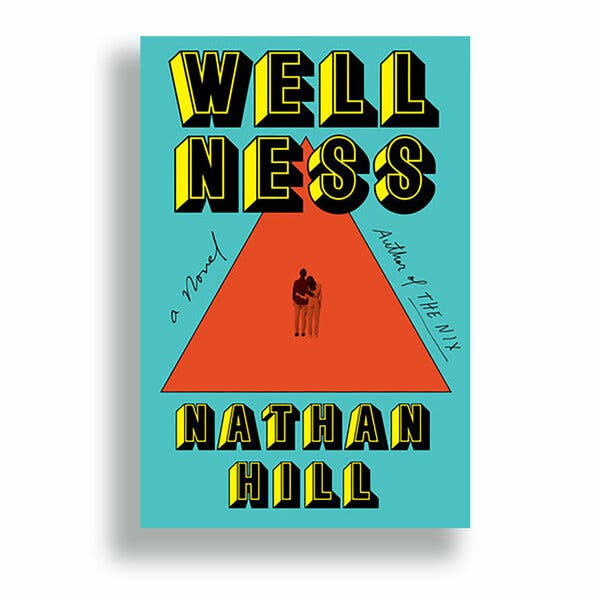
One Book: Wellness by Nathan Hill
I’m almost done reading Wellness, Nathan Hill’s second book after The Nix, which is one of my favorite novels since college. While I don’t love Wellness as much as The Nix, many of its themes deal with myths of self-improvement and our constant need to manufacture little sub-realities to confirm biases, feel better about our choices, and make sense of the world around us. On the surface, the book is about two people at the nadir of the U-shaped curve of marital satisfaction. Really, it’s about cutting through the bullshit (like making arbitrary resolutions) to differentiate between your desires and what you’re conditioned to desire.
One Song: “When You Believe” by Michelle Pfeiffer/Mariah Carey and Sally Dworsky/Whitney Houston
You can stretch your interpretation to make this song about New Year’s resolutions, but really, I wanted to include it because did you know this song was written for Dreamworks’ The Prince of Egypt? Lindsay and I heard it at a bar in the Bahamas, and I was like, “Isn’t this from Dreamwork Animation’s Academy Award-winning film, The Prince of Egypt?” and Lindsay was like, “No, I think it’s just like one of those holiday songs that’s been around forever.” So I looked it up, and not only is it from The Prince of Egypt, but it was written for the movie by Stephen Schwartz (Wicked), performed by Sally Dworsky (The Prince of Egypt) and Michelle Pfeiffer (Grease 2), and won the 1999 Oscar for Best Original Song.
This movie gets forgotten, but this song endures in large part due to Whitney Houston and Mariah Carey’s pop single version recorded for the soundtrack and end credits. Both versions slap, but Lindsay threatened divorce when I said I think I like the film version better.
So, here’s your first task for 2025. Watch both versions below, and vote:
One Hollywood: The Prince of Egypt
You know what? Just watch The Prince of Egypt, it’s so much better than you remember and the music is unbelievable.
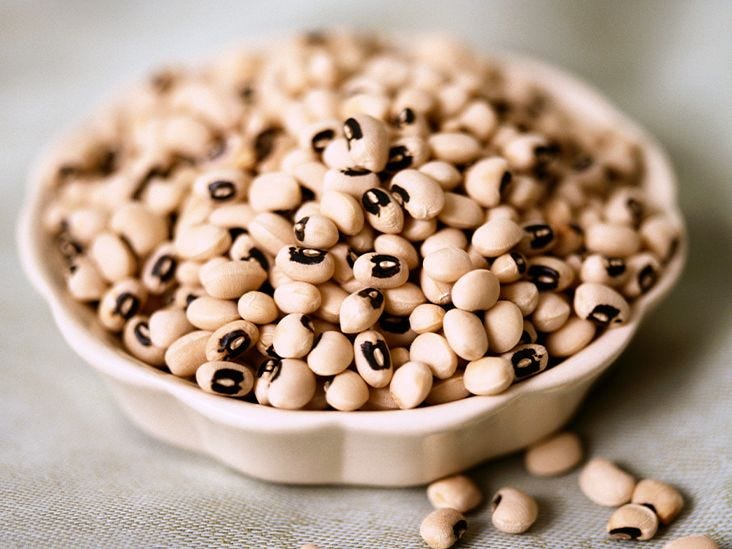
One Food: Black Eyed Peas
Lindsay introduced me to the tradition of eating black eyed peas and collared greens on New Year’s Day. It’s a common tradition in the Black community — especially in the South — that symbolizes prosperity for the new year. Cooked collards are folded dollar bills and black eyed peas are coins. I planned to tell you the origin of this tradition, but it’s actually way more interesting and complex than I can possibly condense here.
Instead, check out food journalist Kayla Stewart’s history for The New York Times.
One Person: You
Yes, you, reading this right now. I started writing this little newsletter as therapy during one of the scariest periods of my professional life. It’s no secret that freelancing is a risky business, but I’ve been remarkably steady for basically six years. Around Thanksgiving, I hemorrhaged clients as companies gutted their editorial staffs. I feel worse for the full-time editors who lost their jobs, but it still sucked to see about 50% of my income evaporate virtually overnight.
More than financial concerns, I was suddenly bored. I made up some of that income by taking on more work from other clients (and I just closed a new one this week), but my dream of working 30 hours/week turned into a nightmare of 10 hours/week. I needed something other than LinkedIn cold-calling and TV shows to occupy my mind and pass the time.
This newsletter gave me something to do, but it’s also sort of reinvigorated the joy I get from writing. I conscripted 20 people into Another Hellish Newsletter. About a month later, we’re up to 70 subscribers and more than 1,000 views. I’m happy about those metrics, but the coolest ones are the untracked ones. I can’t tell you how much I’ve loved all the texts saying popsicles are a frozen soup, the genuine appreciation from people who have gotten shoutouts, and the health check-ins I got from that weak-ass Sickness newsletter on Monday. Just knowing that people take time out of their day to read this not because they feel some sense of obligation to a friend but because they actually enjoy it breathes real life into this stupid little thing and gives me a sense of purpose I’m not sure I’ve ever felt.
So, thanks for letting me know you’re reading. Thanks for sharing. If you do make a resolution, I wish you luck. If you don’t, I still wish you luck.
I make my resolutions at the end of the fiscal year.